Franchise recruitment marketing for Australian and NZ franchisors
Australian and New Zealand franchisors do not have a registration problem. They have a signed-franchisee problem. The fix is measuring cost per signed franchisee, not cost per registration, grading every registration before it reaches your development team, and running each market on its own economics. That is the system. The proof is at the bottom of this page.
Why do most Australian franchisors pay for registrations that never sign?
A registration is a form fill from someone curious about your franchise. A signed franchisee is a territory owner who paid in. Two networks can pull the same registrations and sign a very different number of franchisees. The metric you fund decides which network you build.
Registration volume looks healthy on a dashboard. It does not tell you what a franchisee costs to acquire. Meta and Google will sell you cheaper registrations all day, and cheaper almost always means less qualified. If your agency cannot hand you a cost per signed franchisee, they are grading the top of the funnel and hoping the bottom sorts itself out.
What does it actually cost to sign a franchisee, not a registration?
Cost per signed franchisee is the number that maps to network growth. It is registration cost, times the share that qualify, times the share that reach a signed agreement. Lower the first without watching the other two and you scale waste.
We grade every registration Green, Amber, or Red before it reaches your development team. Green funds the next dollar. Red gets cut from the audience, so your people spend their hours on candidates who can actually fund and run a territory. On the Resicert network we run across Australia and New Zealand, cost per lead fell from A$43.75 to A$18.39, a 58% drop, without buying cheaper junk. Better registrations, tracked to signings.
Why is a New Zealand franchise lead not the same as an Australian one?
One playbook run flat across both markets funds your cheapest territory and starves the rest. Auction costs, audience size, and buyer behaviour are not the same in Auckland and Perth. A cost ceiling that is profitable in one market is a loss in the other.
We run Australia and New Zealand as separate market layers on one system. Each market gets its own cost ceiling, judged against its own economics, so the expensive market is not hidden by the cheap one or dragging it down. On Resicert, the New Zealand layer came in materially cheaper per qualified registration than the Australian one. Same brand. Different math. Run them as one national number and you never see it.
How does the ACCC Franchising Code change how you market to franchisees?
Franchise recruitment in Australia sits inside the Franchising Code of Conduct. You owe a disclosure document and a Key Facts Sheet, a 14-day period before a candidate can sign, and a 14-day cooling-off after. Your marketing has to respect the timeline, not fight it.
The Code that took effect in April 2025 did not slow recruitment. It changed the shape of the funnel. A candidate cannot sign on impulse, so speed to first contact and a nurture sequence that survives a multi-week consideration window matter more than a fast form. Marketing fund contributions sit in a specific-purpose fund with their own disclosure and audit obligations, which is worth knowing before you promise national brand spend you have to account for. New Zealand has no franchise-specific law, so the same brand runs under different rules on each side of the Tasman.
What does the Rocketship Method do for a franchise network?
Diagnose first. Seal the tracking and intake leaks before we spend. Grade every registration Green, Amber, Red. Then scale only the territories where the math holds. Not more registrations. More signed franchisees.
Most agencies run ads into a broken pipeline and blame the algorithm. We run the whole system, tracking, qualification, intake, and paid, and pressure-test it before we spend a dollar. Digital Rocket is a profit leak fixer, not an ads agency. We diagnose before we pitch, because scaling spend on broken tracking just scales the waste.
How do you know this works?
The Resicert network. 50+ franchises sold across Australia and New Zealand over a six-year partnership, with 5 confirmed in June 2026. Cost per lead down 58%, from A$43.75 to A$18.39. Measured on franchisees signed, not forms collected.
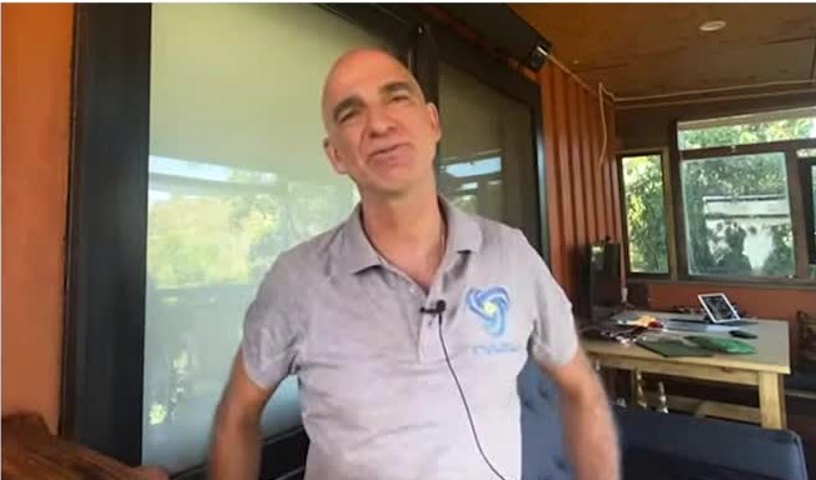
Each June signing is backed by an email confirmation and a paid closing bonus, so the number is not a dashboard estimate. On camera, Resicert’s owner says Digital Rocket outperformed their previous four to five marketing agencies and that they are not switching. The result is also corroborated by a Clutch review. Two countries, one system, separate market layers.
| Result | Figure |
|---|---|
| Franchises sold, AU & NZ | 50+ |
| Lower cost per lead | 58% |
| One partnership | 6 yrs |
| Signed in June 2026 | 5 |
Source: Resicert account data. June 2026 signings verified by email confirmation and paid closing bonus.
What we would look at first
Three things, in this order. Whether every enquiry is tracked to an outcome, whether anything filters before a human picks up, and how long the average callback takes. If any one of those is missing, more spend just moves the problem downstream faster.
“They outperformed the four or five agencies we had before. We are not switching.”Paul · Resicert · 50+ franchises, AU & NZ